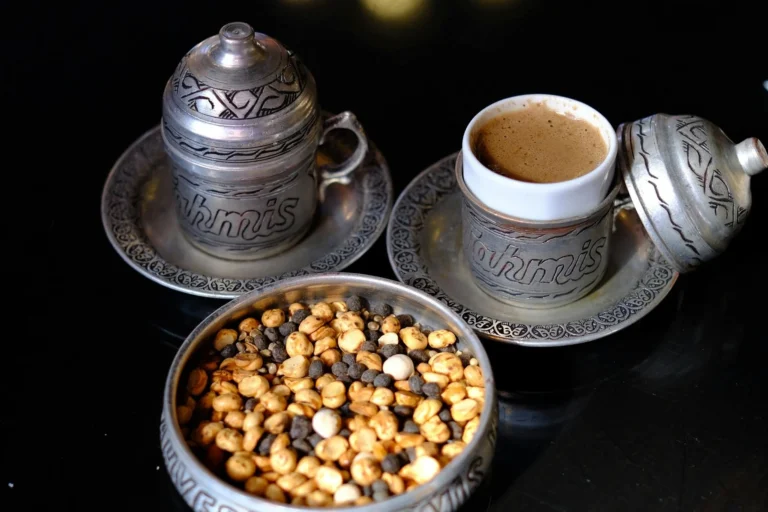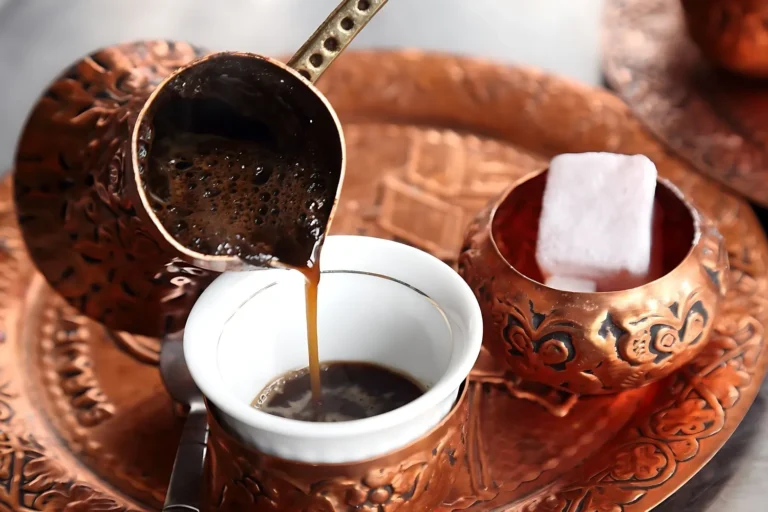
Greek coffee is made using a precise step-by-step process that requires careful attention and timing to achieve the perfect result:
Ingredients and Equipment:
- Extra-finely ground coffee (consistency of powdered sugar)
- Cold water
- Sugar (optional)
- Briki (traditional Greek coffee pot with long handle)
Step-by-Step Preparation Method:
- Measure ingredients: Pour one cup of cold water into the briki and add one large tablespoon of finely ground coffee for each cup you’re making.
- Add sugar (optional): Add one teaspoon of sugar for each cup if you want sweetness, but only at the beginning before heating begins.
- Initial stirring: Stir the mixture only a few times to combine the ingredients, avoiding over-stirring as Greeks traditionally prefer minimal stirring.
- Heat on medium-high: Place the briki on medium-high heat for 2-3 minutes, watching carefully as the coffee heats up.
- Watch for kaimaki formation: Monitor the surface as the coffee heats to see the characteristic foam layer (kaimaki) beginning to form.
- Remove at first boil: Once the coffee begins to boil and rise, immediately remove it from heat to prevent boiling over.
- Pour carefully: Slowly pour the coffee into cups, ensuring even distribution of both the liquid and the kaimaki foam layer.
What is Greek Coffee?
Greek coffee is a traditional unfiltered brewing method where finely ground coffee beans are boiled with water in a special pot called a briki to create an intensely strong, thick beverage.
This ancient method originated in Yemen and spread throughout the Ottoman Empire, eventually becoming deeply embedded in Greek culture and daily social rituals.
Greek coffee is fundamentally different from modern coffee preparation because it’s completely unfiltered, using coffee beans ground to an extremely fine powder-like consistency that’s finer than any other brewing method.
The coffee-to-water ratio is significantly higher than conventional coffee, creating an intensely concentrated beverage that’s traditionally served in small portions similar to espresso. Greek coffee represents more than just a drink; it’s a cultural institution that embodies hospitality, tradition, and the art of slow, mindful coffee consumption that has been passed down through generations from maker to maker.
How to Make Greek Coffee with Milk?
Greek coffee is traditionally not made with milk or cream, as this would alter the authentic texture and cultural experience of this ancient brewing method.
According to traditional Greek coffee preparation, the beverage is served black without any dairy additions, allowing the natural intensity and distinctive flavor profile to shine through. The thick, syrupy consistency and the prized kaimaki foam layer are specifically designed to be enjoyed in their pure form.
What Does Greek Coffee Taste Like?
Greek coffee tastes very strong and intense with a thick, syrupy mouthfeel and lingering dark roast flavors that often include burnt or bitter notes.
The high coffee-to-water ratio of 1:10, combined with the unfiltered brewing method, creates an exceptionally bold flavor profile that’s much more concentrated than regular filtered coffee.
The texture is notably thick and heavy, coating the palate with each sip due to the ultra-fine grind and the presence of microscopic coffee particles that remain in the beverage. The taste experience is characterized by pronounced roasty flavors with a slightly bitter edge, which is why sugar is traditionally added during the brewing process to balance these intense characteristics.
The coffee delivers a full-bodied, robust flavor that lingers long after drinking, creating a memorable and satisfying coffee experience.
Why is Greek Coffee so Healthy?
Greek coffee is healthy when consumed without added sugar because it provides all the established health benefits of pure black coffee:
- Pure black coffee benefits: Greek coffee is essentially just coffee and water, retaining all beneficial compounds like antioxidants and caffeine without any additives.
- Enhanced compound preservation: The unfiltered brewing method preserves more beneficial compounds compared to filtered coffee, giving you the full spectrum of coffee’s natural nutrients.
- High caffeine content advantages: The fine grind and full immersion method creates higher caffeine content for enhanced mental alertness and improved cognitive function.
- Natural portion control: Traditional smaller serving sizes help control caffeine intake while still delivering health benefits without overconsumption.
- No added processing: Contains no artificial additives, preservatives, or chemicals, making it a completely natural beverage choice.
- Hydration support: Traditionally served with cold water, which promotes proper hydration and helps balance the coffee’s effects.
- Sugar-free health benefits: When consumed without added sugar, maintains all health benefits while avoiding negative effects on blood sugar and overall health.
What is the Difference Between Turkish Coffee and Greek Coffee? (Greek Coffee vs Turkish Coffee)
Turkish coffee and Greek coffee are essentially the same beverage with identical brewing methods, ingredients, and taste profiles, differing only in cultural naming conventions and minor serving traditions.
| Aspect | Greek Coffee | Turkish Coffee |
| Origin | Yemen (via Ottoman Empire) | Yemen (via Ottoman Empire) |
| Brewing Method | Boiled in briki with ultra-fine grounds | Boiled in cezve with ultra-fine grounds |
| Equipment | Briki (small pot with long handle) | Cezve (small pot with long handle) |
| Grind Size | Extra-fine (powdered sugar consistency) | Extra-fine (powdered sugar consistency) |
| Coffee-to-Water Ratio | 1:10 | 1:10 |
| Brewing Process | Boil water and coffee together until foam forms | Boil water and coffee together until foam forms |
| Filtration | Unfiltered | Unfiltered |
| Taste Profile | Strong, thick, syrupy with bitter notes | Strong, thick, syrupy with bitter notes |
| Foam Layer | Kaimaki (emphasized importance) | Köpük (foam) |
| Serving Size | Small portions (similar to espresso) | Small portions (similar to espresso) |
| Traditional Accompaniment | Cold glass of water (always) | Cold glass of water (sometimes) |
| Cultural Significance | Greek hospitality and social ritual | Turkish hospitality and social ritual |
| Sugar Addition | During brewing process | During brewing process |
| Main Difference | Cultural naming only | Cultural naming only |
Frequently Asked Questions (FAQ)
These are the most common questions people ask about Greek coffee, covering everything from traditional preparation methods to cultural practices and comparisons with other coffee styles.
What ıs Greek Coffee called?
Greek coffee is called “Glykos” in Greece, pronounced “ghlee-kohss”.
This traditional name reflects the cultural significance of this brewing method in Greek society. The term is widely recognized throughout Greece and represents the authentic way locals refer to their traditional coffee preparation method.
Do Greeks put olive oil in their coffee?
No, Greeks do not traditionally put olive oil in their coffee based on traditional preparation methods.
Greek coffee is made with only finely ground coffee, water, and optionally sugar that’s added during the brewing process. The traditional recipe maintains its authenticity by avoiding any additional ingredients like oils, milk, or cream.
Is Greek Coffee high ın caffeine?
Yes, Greek coffee is high in caffeine compared to most other coffee preparations.
The ultra-fine grind allows water to extract more soluble compounds including caffeine, and the unfiltered brewing method means all the caffeine remains in the final beverage. Additionally, the coffee grounds are fully submerged throughout the entire brewing process, resulting in maximum caffeine extraction.
Is Greek Coffee like Espresso?
No, Greek coffee is similar to espresso in serving size and intensity but differs completely in brewing method and flavor profile.
While both are served as short, strong cups of coffee, Greek coffee is made by boiling finely ground coffee with water in a briki, whereas espresso uses pressure extraction through a machine. The unfiltered nature of Greek coffee creates a thicker, more syrupy texture compared to espresso’s cleaner finish.
Do you put milk in Greek Coffee?
No, you do not put milk in Greek coffee according to traditional preparation methods.
Greek coffee is served black without any dairy additions, allowing the authentic texture and cultural experience to remain intact. The coffee is typically accompanied by a cold glass of water instead of milk, and sugar is added during brewing if sweetness is desired.
Do Greeks drink coffee with sugar?
Yes, Greeks often drink coffee with sugar, but it must be added during the brewing process rather than after serving.
The sugar is mixed with the coffee and water at the beginning of preparation in the briki, which helps mask the natural bitterness of the strong coffee. This traditional method ensures the sugar dissolves properly and doesn’t disturb the settled grounds at the bottom of the cup.