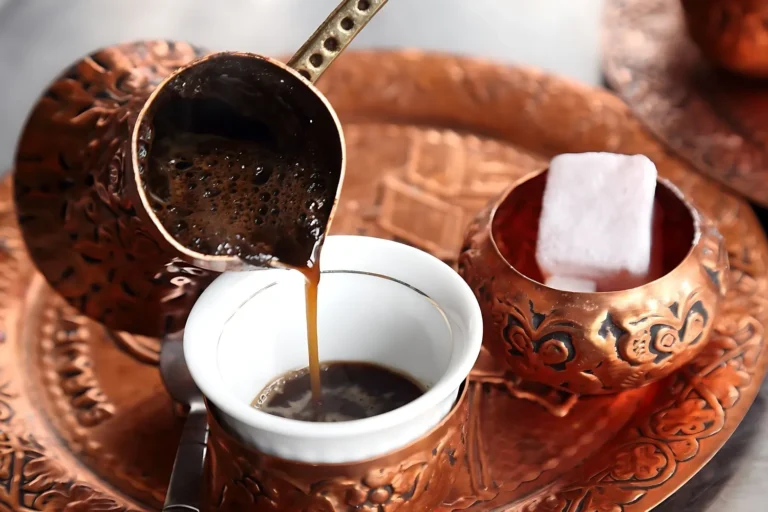
Kurdish coffee is made using a traditional method that involves preparing a paste from roasted terebinth tree fruits, then combining it with milk or water to create a smooth, caffeine-free beverage.
This ancient brewing technique requires careful attention to temperature and timing to achieve the perfect creamy texture and rich flavor profile.
Ingredients and Equipment:
- Menengiç coffee paste (traditional method) or finely ground menengiç (modern method)
- Whole milk (for traditional preparation) or cold water (for electric coffee maker)
- Sugar or honey (optional, to taste)
- Traditional copper cezve or electric Turkish coffee maker (SAKI)
Step-by-Step Preparation Method:
Traditional Method with Copper Cezve (Using Menengiç Paste and Milk):
- Mix the Ingredients: In a copper cezve or small saucepan, combine 2 tablespoons of menengiç paste with 2 cups of whole milk. You can substitute water for a lighter taste, though milk provides the traditional creamy texture that defines authentic Kurdish coffee.
- Heat Gently: Place the cezve over low heat and stir gently to thoroughly combine the menengiç paste with the milk. The slow heating process is crucial for preventing the milk from curdling and ensuring proper paste integration.
- Simmer Carefully: Allow the mixture to simmer on low heat for several minutes, maintaining careful temperature control. Avoid bringing the mixture to a full boil, as this can cause the milk to curdle and ruin the smooth texture.
- Let it Rest: After simmering, remove the cezve from heat and allow the mixture to settle for about one minute. This resting period allows the heavier paste particles to settle toward the bottom, creating the characteristic layered texture.
- Serve Traditionally: Pour the coffee into traditional small cups, adding sugar or honey if desired. The traditional serving includes both the liquid and some of the settled paste, creating a rich, textured drinking experience.
Modern Method with Electric Turkish Coffee Maker (Using Ground Menengiç and Water):
- Prepare Ingredients: Add 2 tablespoons of finely ground menengiç to the SAKI Electric Turkish Coffee Maker. This method specifically uses ground menengiç rather than paste to ensure proper function with the electric brewing system.
- Add Water: Pour cold water up to the indicated level in the Turkish coffee maker.
- Brew Process: Turn on the SAKI machine and allow it to complete the brewing cycle. The machine will automatically heat the mixture to the optimal temperature, ensuring consistent results without the need for constant monitoring.
- Wait and Enjoy: Once the brewing cycle is complete, carefully pour the menengiç coffee into your serving cups. The electric method produces a lighter-bodied beverage compared to the traditional milk-based preparation but maintains the distinctive menengiç flavor profile.
What is Kurdish Coffee (Menengiç Coffee)?
Kurdish coffee, also called menengiç coffee, is a unique caffeine-free beverage originating from Kurdish and Turkish culinary traditions. This distinctive drink is crafted from the fruits of the terebinth tree, a wild pistachio variety known locally as Pistacia or menengiç.
The production process begins with harvesting pistacia fruits, which are then sun-dried, roasted, and mashed into a thick paste. This paste form distinguishes menengiç coffee from conventional ground coffee products. When purchasing menengiç coffee, you’ll receive a paste rather than dry ground particles.
What does Kurdish Coffee Taste Like?
Kurdish coffee delivers a genuinely inviting aroma and flavor profile that’s distinctly different from conventional coffee:
- Nutty Base: The roasted terebinth fruits provide a rich, nutty foundation similar to roasted pistachios but with more complex, earthy notes.
- Smooth Texture: When prepared with milk, the beverage has a velvety, comforting mouthfeel that’s thicker than regular coffee but lighter than a latte.
- Earthy Undertones: The natural flavor of the terebinth tree fruits creates distinctive earthy notes that set it apart from both coffee and tea.
- Caffeine-Free Comfort: The absence of caffeine allows the natural flavors to shine through without the bitter edge associated with coffee beans.
- Versatile Sweetness: The neutral flavor profile accepts sugar and honey additions well, allowing for customization based on personal preference.
Kurdish Coffee Where to Buy?
For authentic Kurdish coffee (menengiç), we highly recommend starting with Mahabad, a specialized online retailer that offers genuine, high-quality menengiç products sourced directly from traditional Kurdish producers.
Mahabad stands out as the premier destination for authentic Kurdish coffee products, offering both traditional menengiç paste and finely ground versions suitable for modern preparation methods. Their products maintain the traditional quality and authenticity that coffee enthusiasts seek.
Comparison of Kurdish Coffee and Turkish Coffee
Kurdish coffee and Turkish coffee represent two distinct traditions within the broader Turkish coffee culture, each with unique characteristics and preparation methods.
| Aspect | Kurdish Coffee (Menengiç) | Turkish Coffee |
| Primary Ingredient | Terebinth tree fruits (wild pistachio) | Finely ground coffee beans |
| Caffeine Content | Caffeine-free | High caffeine content |
| Preparation Base | Traditionally milk, modern versions use water | Always water |
| Texture | Smooth, creamy with settled paste | Thick, syrupy with coffee grounds |
| Flavor Profile | Nutty, earthy, mild | Intense, bitter, strong |
| Equipment | Cezve or electric coffee maker | Traditional cezve (copper pot) |
| Serving Time | Any time of day | Typically morning or afternoon |
| Cultural Origin | Kurdish/Turkish southeastern regions | Ottoman Empire, Yemen origins |
| Foam Formation | Minimal to no foam | Signature kaimaki foam essential |
| Sugar Addition | Added during or after preparation | Must be added during brewing |
| Grind Consistency | Paste or very fine powder | Extra-fine, powder-like |
| Filtration | Unfiltered, paste settles | Unfiltered, grounds settle |
Frequently Asked Questions (FAQ)
Kurdish coffee enthusiasts often have questions about this unique beverage’s preparation, ingredients, and cultural significance. Here are the most commonly asked questions with clear, practical answers.
What is the Kurdish drink qazwan?
Qazwan is the Kurdish name for menengiç coffee, specifically referring to the terebinth tree from which the beverage is made.
In Kurdish culture, qazwan represents a traditional drink that has been passed down through generations in mountainous Kurdistan regions. The term “qazwan” directly translates to “terebinth” in Kurdish, emphasizing the connection between the beverage and its natural source.
What are the ingredients in Kurdish (Menengic) Coffee?
Kurdish coffee contains only simple, natural ingredients: menengiç (roasted terebinth tree fruits), milk or water, and optional sugar or honey.
The simplicity of ingredients allows the natural nutty, earthy flavors of the terebinth fruits to shine through. No artificial additives or preservatives are used in authentic menengiç coffee preparation.
Do you put milk in Kurdish Coffee?
Yes, milk is traditionally used in Kurdish coffee preparation, creating the characteristic creamy texture that defines authentic menengiç coffee.
The traditional method combines menengiç paste with whole milk in a copper cezve or saucepan, producing a rich, smooth beverage.
Can you make Menengiç Coffee in an electric Turkish Coffee maker?
Yes, you can make menengiç coffee in an electric Turkish coffee maker, but you must use water instead of milk and finely ground menengiç rather than paste.
Add 2 tablespoons of ground menengiç to the machine, pour cold water to the indicated level, and let the machine complete its brewing cycle. While this method produces excellent results, it creates a lighter-bodied beverage compared to traditional milk-based preparation.