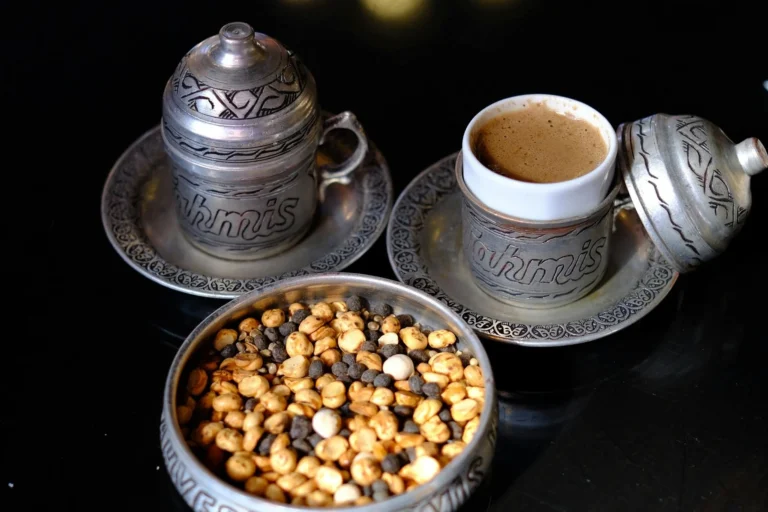
Turkish coffee is made using a traditional slow-brewing method in a special pot called a cezve. Requiring careful timing and attention to create the signature foam, though it can also be prepared using alternative cooking methods:
Ingredients and Equipment:
- Very finely ground Turkish coffee (finer than espresso, almost powder-like)
- Cold filtered water
- Granulated sugar (optional, based on preference)
- Cezve or ibrik (wide-bottomed copper pot with long handle)
- Turkish coffee cups
- Teaspoon for transferring foam
Step-by-Step Preparation Method:
Traditional Cezve Method:
- Measure water and add ingredients: Put 1 cup of water into the cezve for each cup you’re making, then add one heaping tablespoon of finely ground Turkish coffee per cup. If using sugar, add it now: none for “sade”, 0.5 teaspoon for “az şeker”, 1-2 teaspoons for “orta”, or 3-4 teaspoons for “şekerli”.
- Stir mixture: Stir the coffee, water, and sugar together until well combined, ensuring no lumps remain.
- Heat slowly: Place the cezve over medium heat and cook for 3-4 minutes, watching carefully as the mixture heats up.
- Watch for foam development: As the coffee warms, a dark foam will begin to build on the surface – this is crucial for authentic Turkish coffee.
- Transfer foam to cups: When the mixture is close to boiling, use a teaspoon to transfer some of the precious foam into each coffee cup before the coffee boils.
- First pour: When the coffee reaches a boil, immediately pour half of it into the cups over the foam you’ve already placed.
- Final boil: Return the cezve to heat and boil the remaining coffee for an additional 10-15 seconds.
- Complete serving: Fill the cups to the rim with the remaining coffee and serve immediately with cold water and a small sweet treat.
Alternative Cooking Methods:
- Small Saucepan Method: Follow the same steps using a very small, heavy-bottomed saucepan if a cezve is not available, though foam development may be less pronounced.
- Stovetop with Adjustable Heat: Use a micro burner or easily adjustable heat source for more precise temperature control during the 2-2.5 minute brewing process.
- Sand Cooking Method: Traditional method using hot sand for even heat distribution, creating exceptional foam and flavor control.
- French Press Adaptation (Non-Traditional): Heat water to 195°F, add finely ground Turkish coffee and sugar to the French press, pour hot water, stir gently, steep for 4 minutes, then press slowly. This method won’t produce the traditional foam or allow grounds to settle naturally in the cup, making it less authentic but accessible for those without proper equipment.
What is Turkish Coffee? What is Turkish Coffee Made Of?
Turkish coffee is a traditional brewing method where very finely ground coffee beans are slowly cooked with water and sugar in a special pot called a cezve, served unfiltered with the grounds settling naturally in the cup.
This centuries-old preparation technique, recognized by UNESCO as an Intangible Cultural Heritage of Humanity, represents one of the world’s oldest coffee brewing methods. Unlike modern filtered coffee systems, Turkish coffee involves cooking the coffee grounds directly with water, allowing them to remain in the final beverage where they settle to the bottom of the cup.
Essential Ingredients:
- Finely Ground Turkish Coffee
- Cold Filtered Water
- Granulated Sugar (Optional)
- Cezve or Ibrik
What does Turkish Coffee Taste Like?
Turkish coffee has a rich, intense, and full-bodied flavor that is significantly stronger and more concentrated than regular filtered coffee, with a thick, almost syrupy texture and distinctive earthy undertones.
The taste profile of Turkish coffee is uniquely complex due to its preparation method. Since the finely ground coffee remains in the cup rather than being filtered out, every sip delivers maximum extraction and intensity. The coffee has a robust, bold flavor with deep, roasted notes that can range from slightly bitter to pleasantly sweet depending on the sugar level chosen during preparation.
The foam (köpük) that tops authentic Turkish coffee adds another sensory dimension, creating a creamy layer that enhances the overall taste experience. When prepared correctly, this foam carries subtle flavor notes and provides a pleasant contrast to the intensity of the coffee below.
How to Make Turkish Coffee with Milk?
Turkish coffee with milk is not traditionally prepared in Turkey, but it can be made by either adding warm milk instead of water during the cooking process or by adding steamed milk to already prepared Turkish coffee, though this significantly alters the authentic taste and cultural experience.
Method 1: Milk-Based Turkish Coffee: Replace half the water with whole milk when measuring your liquid. Use ¾ cup of cold water and ¾ cup of cold milk per serving. Add the finely ground Turkish coffee and sugar to the cezve, then slowly pour in the milk-water mixture. Cook using the same slow-heating method, though be extra careful as milk can scorch more easily than water. The foam development will be different, creating a lighter, creamier texture.
Method 2: Traditional Coffee with Added Milk: Prepare Turkish coffee using the authentic method with water only. Once the coffee is ready and has settled for 1-2 minutes, warm a small amount of milk separately and add it gently to the cup. This preserves more of the traditional flavor while adding the desired creaminess.
How to Make Turkish Coffee with Foam? (Tips and Tricks)
Turkish coffee foam is created by slowly heating the coffee mixture over medium heat for 3-4 minutes until a dark foam naturally develops on the surface, then carefully transferring this foam to cups with a teaspoon before the final pour.
The signature foam (köpük) is considered the hallmark of perfectly prepared Turkish coffee and demonstrates the skill of the person making it. Achieving rich, thick foam requires specific techniques and careful attention to timing throughout the brewing process.
Essential Foam Creation Tips:
- Proper Heat Control: Use medium heat exclusively—never high heat. The slow, gradual heating process over 3-4 minutes allows the natural oils and proteins in the finely ground coffee to emulsify properly, creating the foam.
- Watch for Foam Formation: As the coffee mixture heats, you’ll notice a dark foam beginning to build on the surface. This usually starts appearing after 2-3 minutes of heating and gradually becomes thicker as it approaches boiling.
- Pre-foam Transfer Technique: When the mixture is close to boiling, immediately use a teaspoon to transfer some foam into each cup. This ensures every cup gets foam even before the main pour.
- Cezve Advantage: Using a traditional cezve (copper pot) rather than a regular saucepan significantly improves foam development due to its wide bottom and superior heat distribution properties.
- Two-Stage Pouring: After transferring initial foam to cups, pour only half the coffee when it reaches a boil, then return the cezve to heat for 10-15 seconds before completing the pour. This technique maximizes foam retention.
- Grind Quality Matters: Extra-fine grinding (finer than espresso) is crucial for foam formation, as larger particles won’t create the proper emulsification needed for thick, lasting foam.
Why is Turkish Coffee so Healthy?
Turkish coffee is considered healthy because it contains high concentrations of antioxidants, beneficial compounds, and caffeine in a small serving size, while its unfiltered preparation method preserves more of the coffee’s natural nutrients compared to filtered brewing methods.
- High Antioxidant Content: Unfiltered preparation retains more chlorogenic acids and polyphenols that combat free radicals.
- Concentrated Nutrients: Small serving size delivers potent doses of beneficial compounds without excess liquid consumption.
- Controlled Caffeine Intake: Traditional one-cup serving prevents caffeine overconsumption while providing metabolic benefits.
- Enhanced Bioavailability: Fine grounds allow maximum extraction of coffee’s natural health compounds.
- Mindful Consumption: Slow preparation and drinking ritual promotes better digestion and stress reduction.
- Social Health Benefits: Traditional sharing customs support mental well-being through social connection.
Frequently Asked Questions (FAQ)
Turkish coffee preparation often raises specific questions about technique, equipment, and cultural practices. Here are the most frequently asked questions with clear, practical answers to help you brew authentic Turkish coffee successfully.
Do I need that special pot (cezve or ibrik) to make Turkish coffee?
No, but it’s highly recommended for authentic results.
You can use a very small, heavy-bottomed saucepan as an alternative to a traditional cezve or ibrik. The cezve provides better heat distribution and foam development due to its wide bottom and copper construction.
However, if you’re not concerned with traditional presentation and maximum foam, a small saucepan will work, though the results may be less authentic.
What is the ratio of coffee to water in Turkish coffee?
The traditional ratio is 1 cup of water per serving, measured using the actual coffee cup you’ll serve in, with one heaping tablespoon of finely ground coffee per cup.
This creates the proper concentration and allows for the signature thick, intense flavor. The water measurement using the serving cup ensures accurate proportions rather than standard measuring cups.
How much coffee do you put in 1 cup of water?
Use one heaping tablespoon of finely ground Turkish coffee for each cup of water you’re preparing.
This ratio provides the intense, concentrated flavor that Turkish coffee is known for. Remember that Turkish coffee servings are smaller than regular coffee cups, so this ratio creates the perfect strength for the traditional serving size.
What kind of coffee/roast should I buy to make Turkish Coffee?
Use light to medium roasted, finely ground Turkish coffee that’s ground much finer than espresso—almost like flour or powdered sugar.
Look for coffee specifically labeled as “Turkish coffee” or “extra fine grind” at Middle Eastern or Mediterranean supermarkets. The grind consistency is more important than the specific brand, as the coffee must be ground to an almost powder-like texture for proper extraction and foam development.
How many minutes to boil Turkish coffee?
Turkish coffee should be heated slowly over medium heat for 3-4 minutes total, not boiled continuously.
Watch carefully as it approaches boiling, transfer foam to cups, then boil briefly when it reaches the boiling point. After the first pour, return to heat for only an additional 10-15 seconds before completing the serving.
Is Turkish coffee healthy?
Yes, Turkish coffee can be healthy due to its high antioxidant content and concentrated beneficial compounds preserved through the unfiltered brewing method.
The small serving size provides caffeine benefits without overconsumption, and the mindful preparation ritual can contribute to stress reduction.
However, individual tolerance varies, and those with caffeine sensitivity should consume it cautiously.
Do you drink water before or after Turkish coffee?
Both, but primarily before Turkish coffee to cleanse your palate and enhance the coffee tasting experience.
The water is traditionally served alongside the coffee, allowing you to clear your palate between sips for maximum enjoyment. This practice helps you better appreciate the complex flavors and intensity of the coffee.
Do you drink the sludge at the bottom of Turkish coffee?
No, you should not drink the settled grounds (sludge) at the bottom of Turkish coffee.
Allow the coffee to settle for 1-2 minutes before drinking, then sip carefully, leaving the sediment undisturbed at the bottom.
The grounds are meant to settle naturally and remain in the cup—consuming them would be unpleasant and gritty.
Is Turkish coffee stronger than Nescafé?
Yes, Turkish coffee is significantly stronger than Nescafé instant coffee in both caffeine content and flavor intensity.
The concentrated preparation method and fine grounds create a much more potent coffee experience compared to instant coffee. Turkish coffee delivers a rich, full-bodied taste that’s far more intense than the mild, processed flavor of instant coffee products.